
Skip to content
lennox

Partner Treatment Library

GLP-1 & Weight Management

Retatrutide

A triple-pathway investigational medicine being studied for weight and metabolic outcomes.

Download evidence brief
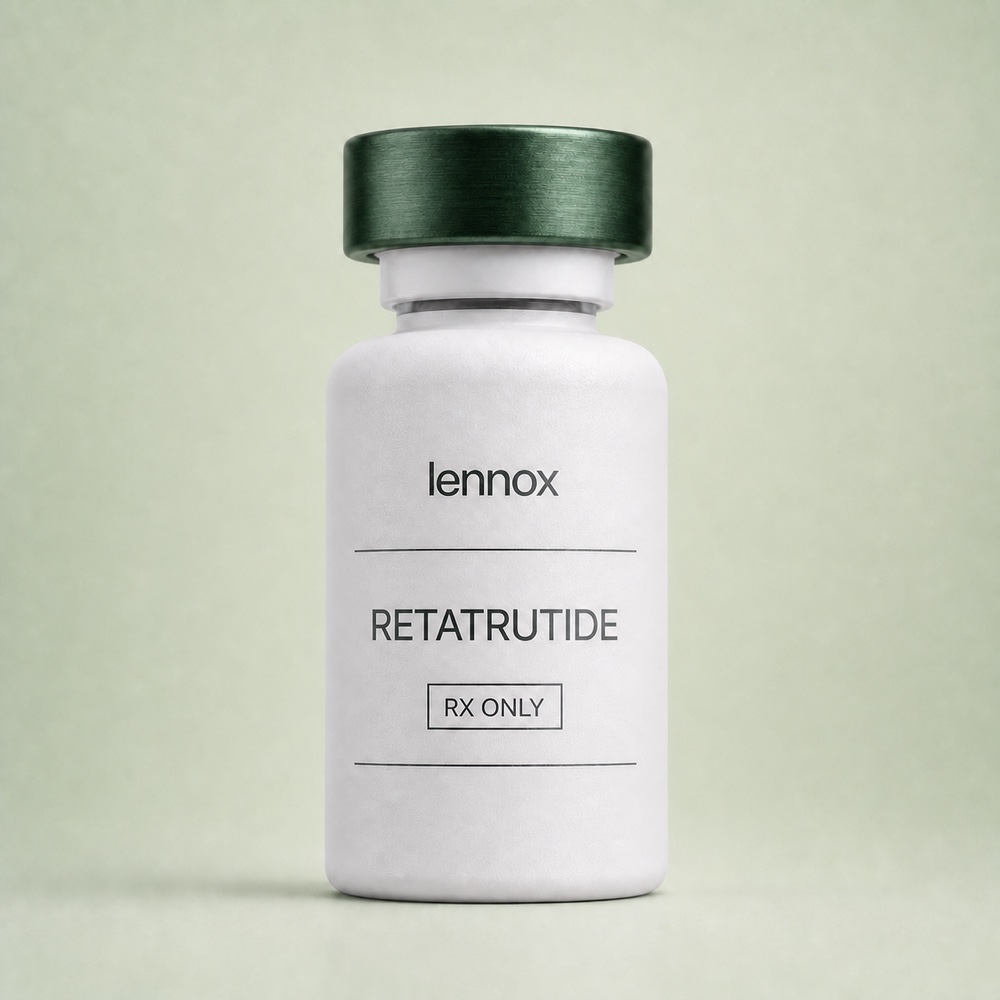
Lennox Retatrutide product vial
Common goals
Potential for major weight reduction through combined GLP-1, GIP, and glucagon-receptor activity.
Best program fit
Fits education and future planning only; routine prescribing is not currently available.
Format
Injectable

Partner education guide

Where this may fit in an offering.

Potential for major weight reduction through combined GLP-1, GIP, and glucagon-receptor activity. Potential improvements in waist size, blood sugar, liver-fat measures, and broader metabolic risk. A differentiated future option for individuals who need greater metabolic impact than existing approaches provide.

Educational business-planning summary. Potential benefits vary, are not guaranteed, and require individual-specific clinical review.

01 / Common goals

What people may want to understand.

Primary goals

Potential benefits and goals

  • Potential for major weight reduction through combined GLP-1, GIP, and glucagon-receptor activity.
  • Potential improvements in waist size, blood sugar, liver-fat measures, and broader metabolic risk.
  • Once-weekly administration in clinical trials may support long-term adherence if the therapy is ultimately approved.

Program value

How it may support a program

  • A differentiated future option for individuals who need greater metabolic impact than existing approaches provide.
  • A strong research narrative for medically supervised weight-management and metabolic programs.

Retatrutide remains investigational and is not approved for routine prescribing. Potential benefits come from clinical-trial products and are not guaranteed for research-market or compounded products.

02 / Program fit

Program and operational considerations.

01Administration
Catalog format: Injectable. The prescribing clinician and dispensing pharmacy confirm the exact preparation, concentration, handling, and administration technique.
02Typical frequency
Once weekly in phase 2 and phase 3 obesity studies, using gradual escalation to improve tolerability.
03Expected duration
The phase 2 obesity trial lasted 48 weeks; ongoing phase 3 programs generally study treatment for roughly 65 to 89 weeks.
04Practical advantages
A differentiated future option for individuals who need greater metabolic impact than existing approaches provide.

03 / Suitability considerations

Who may be considered.

Who may be considered

  • A carefully screened adult whose goals align with the potential benefits above and who understands that individual response varies.
  • An individual willing to complete clinician-directed baseline review, monitoring, and an outcome-based follow-up plan.

Qualification notes

  • A differentiated future option for individuals who need greater metabolic impact than existing approaches provide.
  • Strongest fit occurs when the exact formulation, route, source, contraindications, and measurable goals can be clearly documented.

04 / Safety & suitability

What must be screened before treatment.

01

Common or temporary

  • Gastrointestinal effects such as nausea, diarrhea, vomiting, and constipation were the most frequent issues and were dose related.
  • Heart-rate increases were observed and require further characterization.

02

Serious or important

  • Long-term pancreatic, gallbladder, cardiovascular, thyroid, pregnancy, and cancer safety are not yet established.
  • Non-trial products add substantial identity, sterility, concentration, and labeling risk.

03

Avoid or use only with specialist input

  • Routine clinical or wellness use outside a registered research protocol.
  • Pregnancy, breastfeeding, or any condition excluded by the governing clinical-trial protocol.

04

Screening checklist

  • Use the active trial protocol for BMI, comorbidity, diabetes, medicine, gastrointestinal, cardiovascular, laboratory, and pregnancy screening.
  • Confirm trial registration, research-site legitimacy, product chain of custody, and informed consent.

05

When to refer

  • Anyone seeking retatrutide should be directed to a legitimate clinical-trial site or to an obesity-medicine clinician for an approved alternative.

Safety information is not exhaustive. Prescribing, screening, dosing, monitoring, and emergency guidance must come from an appropriately licensed clinician and the exact product information.

What the research says · reviewed August 2026

Research and source context.

One strong phase 2 trial is promising, but phase 3 and long-term data are still needed.

01 / Human research

The clearest clinical signal

In a 338-person phase 2 trial, weekly retatrutide produced dose-linked mean loss up to 24.2% at 48 weeks vs 2.1% placebo.

02 / Real-world reports

What people describe

About eight detailed online accounts described strong appetite or weight effects, but many involved non-trial, gray-market material. Nausea, diarrhea, fatigue, higher resting heart rate, and dose sensitivity were recurring themes; some reported weak appetite control.

Public personal accounts are unverified and cannot show how common an outcome is.

03 / Cautions

What deserves attention

Nausea, vomiting, diarrhea, constipation, belly pain, and reflux are common. Gallbladder disease and pancreatitis are uncommon but serious concerns. Dehydration can harm kidneys.

Does the research match this exact product?

Trial-grade weekly drug cannot validate products sold as research retatrutide.

Complete evidence briefClinical summary, safety notes, reported timing, regulatory context, and linked sources in one document.

Download the evidence briefPDF · larger type

Evidence and regulatory status can change. Confirm the current label, formulation, route, dose, pharmacy source, jurisdiction, and intended use before offering treatment.

Education before offering.

Treatment information is for education only. It is not medical advice. A licensed clinician will review your health and decide whether a treatment is appropriate for you. Eligibility and availability may vary.

Back to all treatments