Skip to content
lennox

Partner Treatment Library

GLP-1 & Weight Management

Semaglutide/Cyanocobalamin

Weekly appetite and weight-management support paired with vitamin B12.

Download evidence brief
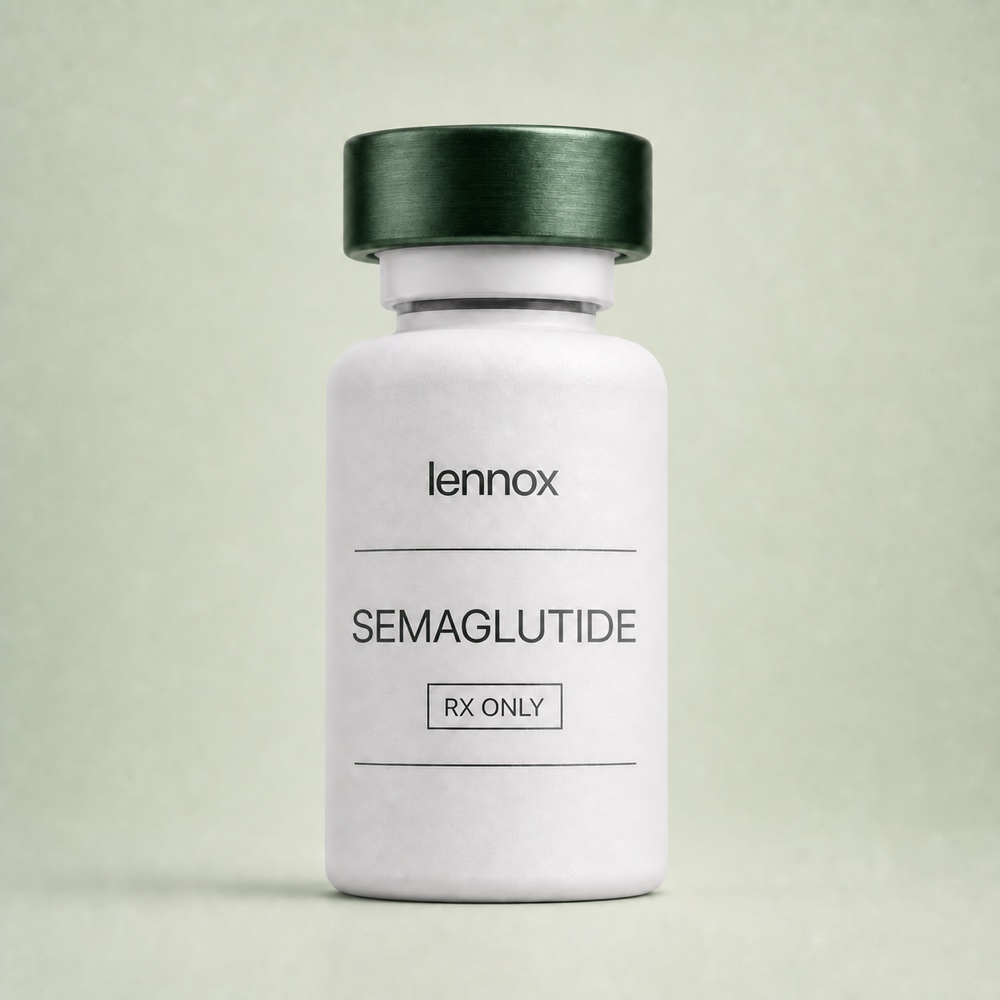
Lennox Semaglutide/Cyanocobalamin product vial
Common goals
Meaningful, sustained weight reduction when semaglutide is paired with nutrition and activity support.
Best program fit
May fit a structured weight-management offering with simple weekly administration and measurable follow-up.
Format
Injectable

Partner education guide

Where this may fit in an offering.

Meaningful, sustained weight reduction when semaglutide is paired with nutrition and activity support. Less hunger, earlier fullness, and greater control over portions and food intake. A once-weekly injection can simplify adherence for individuals who want a high-impact medical weight-management option.

Educational business-planning summary. Potential benefits vary, are not guaranteed, and require individual-specific clinical review.

01 / Common goals

What people may want to understand.

Primary goals

Potential benefits and goals

  • Meaningful, sustained weight reduction when semaglutide is paired with nutrition and activity support.
  • Less hunger, earlier fullness, and greater control over portions and food intake.
  • Potential improvements in waist size, blood pressure, blood sugar, mobility, and other weight-related health measures.

Program value

How it may support a program

  • A once-weekly injection can simplify adherence for individuals who want a high-impact medical weight-management option.
  • Added vitamin B12 may support individuals with a documented or clinically plausible deficiency.

Benefits are based primarily on standardized semaglutide injection. Results vary, are not guaranteed, and the exact compounded vitamin blend requires separate clinical and quality review.

02 / Program fit

Program and operational considerations.

01Administration
Catalog format: Injectable. The prescribing clinician and dispensing pharmacy confirm the exact preparation, concentration, handling, and administration technique.
02Typical frequency
The evidence-based semaglutide injection regimen is once weekly with gradual dose escalation. The exact blend schedule should not be assumed from a branded product.
03Expected duration
Weight-management treatment is generally long term when it is effective, tolerated, and still clinically appropriate. Weight regain is common after GLP-1 therapy ends.
04Practical advantages
A once-weekly injection can simplify adherence for individuals who want a high-impact medical weight-management option.

03 / Suitability considerations

Who may be considered.

Who may be considered

  • A carefully screened adult whose goals align with the potential benefits above and who understands that individual response varies.
  • An individual willing to complete clinician-directed baseline review, monitoring, and an outcome-based follow-up plan.

Qualification notes

  • A once-weekly injection can simplify adherence for individuals who want a high-impact medical weight-management option.
  • Strongest fit occurs when the exact formulation, route, source, contraindications, and measurable goals can be clearly documented.

04 / Safety & suitability

What must be screened before treatment.

01

Common or temporary

  • Nausea, diarrhea, vomiting, constipation, abdominal discomfort, reflux, headache, and fatigue are common, especially while the dose is changing.
  • Reduced appetite can be substantial. Individuals may need support to maintain hydration, protein intake, and lean mass.

02

Serious or important

  • Uncommon but important risks include pancreatitis, gallbladder disease, dehydration-related kidney injury, severe gastrointestinal reactions, and serious hypersensitivity.
  • Low blood sugar is mainly a concern when combined with insulin or medicines that directly increase insulin release.
  • The product carries a boxed warning based on thyroid C-cell tumors in rodents; human relevance is unknown, but the labeled thyroid-cancer contraindications still apply.

03

Avoid or use only with specialist input

  • Pregnancy or an active plan to become pregnant.
  • Personal or family history of medullary thyroid carcinoma, or Multiple Endocrine Neoplasia syndrome type 2.
  • Prior serious hypersensitivity to the active drug or formulation ingredients.

04

Screening checklist

  • Confirm BMI, weight-related conditions, prior weight-care attempts, current medicines, and realistic long-term goals.
  • Review diabetes therapy, low-blood-sugar risk, kidney function when clinically indicated, and any history of pancreatitis or gallbladder disease.
  • Ask about severe delayed stomach emptying, persistent vomiting, planned surgery or deep sedation, pregnancy potential, and thyroid-cancer history.

05

When to refer

  • Urgent medical assessment is appropriate for severe or persistent abdominal pain, repeated vomiting with dehydration, suspected gallbladder disease, serious allergic reaction, or symptoms of marked hypoglycemia.
  • Complex diabetes regimens, active eating disorders, pregnancy, severe gastrointestinal disease, or uncertain endocrine cancer history require appropriately qualified medical review.

Safety information is not exhaustive. Prescribing, screening, dosing, monitoring, and emergency guidance must come from an appropriately licensed clinician and the exact product information.

What the research says · reviewed August 2026

Research and source context.

Large, consistent trials support semaglutide, but not this exact compounded combination.

01 / Human research

The clearest clinical signal

Weekly semaglutide 2.4 mg caused about 14.9% mean weight loss at 68 weeks, versus 2.4% with placebo, in 1,961 adults. The exact semaglutide+vitamin B12 mix has not been tested in a large trial.

02 / Real-world reports

What people describe

In about 10 detailed injection accounts sampled, appetite quieting often began in days to a few weeks. Many reported steady loss; others reported little effect. Nausea, constipation, fatigue, reflux, and food aversion were common.

Public personal accounts are unverified and cannot show how common an outcome is.

03 / Cautions

What deserves attention

Nausea, vomiting, diarrhea, constipation, belly pain, and reflux are common. Gallbladder disease and pancreatitis are uncommon but serious concerns. Dehydration can harm kidneys.

Does the research match this exact product?

Direct evidence is for the branded peptide alone at fixed trial doses, not this compounded vitamin blend.

Complete evidence briefClinical summary, safety notes, reported timing, regulatory context, and linked sources in one document.

Download the evidence briefPDF · larger type

Evidence and regulatory status can change. Confirm the current label, formulation, route, dose, pharmacy source, jurisdiction, and intended use before offering treatment.

Education before offering.

Treatment information is for education only. It is not medical advice. A licensed clinician will review your health and decide whether a treatment is appropriate for you. Eligibility and availability may vary.

Back to all treatments