Skip to content
lennox

Partner Treatment Library

Peptides

Thymosin Alpha-1

Immune-signaling and recovery support for selected condition-specific needs.

Download evidence brief
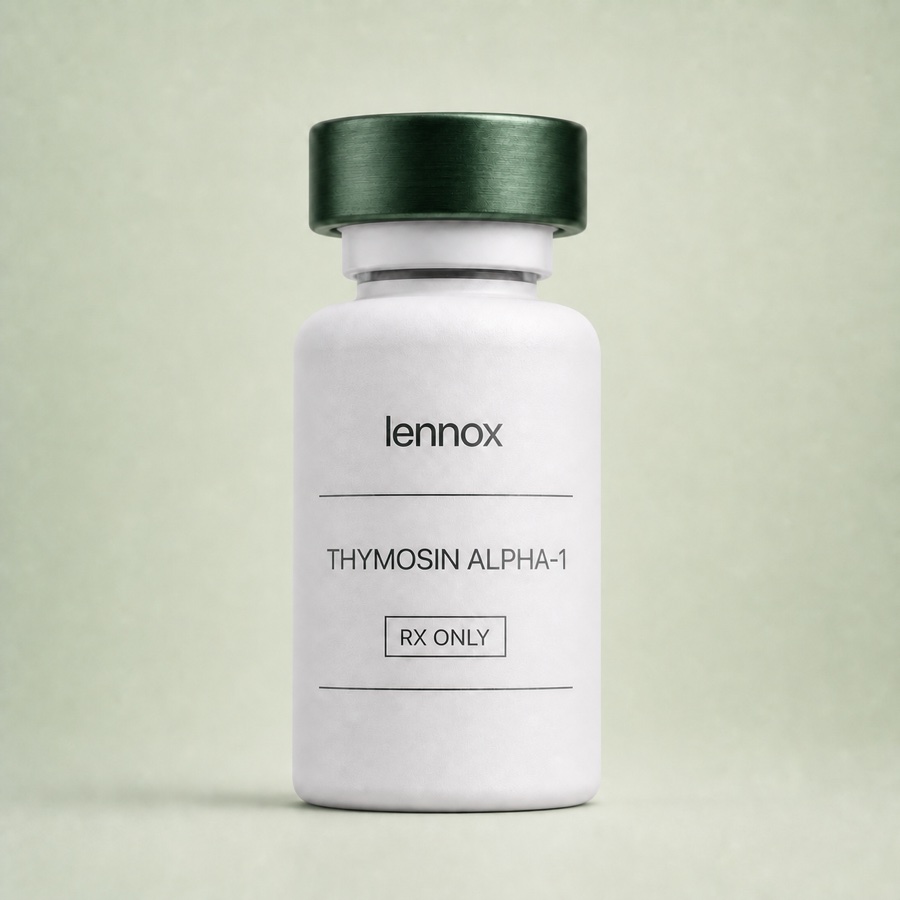
Lennox Thymosin Alpha-1 product vial
Common goals
Potential immune-modulating support for selected individuals with impaired immune resilience or serious condition-specific needs.
Best program fit
May fit specialist-led programs where immune resilience, infection risk, or treatment tolerance is central.
Format
Clinician-confirmed formulation

Partner education guide

Where this may fit in an offering.

Potential immune-modulating support for selected individuals with impaired immune resilience or serious condition-specific needs. May support recovery-oriented care where immune balance, infection risk, or treatment tolerance is a central concern. Offers a differentiated immune-support option for carefully selected, medically complex individuals.

Educational business-planning summary. Potential benefits vary, are not guaranteed, and require individual-specific clinical review.

01 / Common goals

What people may want to understand.

Primary goals

Potential benefits and goals

  • Potential immune-modulating support for selected individuals with impaired immune resilience or serious condition-specific needs.
  • May support recovery-oriented care where immune balance, infection risk, or treatment tolerance is a central concern.
  • Human studies across several disease settings provide a clinically interesting rationale for specialist-led adjunctive use.

Program value

How it may support a program

  • Offers a differentiated immune-support option for carefully selected, medically complex individuals.
  • Can be paired with diagnosis-specific endpoints rather than vague “immune boost” claims.

Potential benefits are condition-specific and research results are mixed. Thymosin alpha-1 is not approved for general wellness, and outcomes depend heavily on diagnosis and concurrent care.

02 / Program fit

Program and operational considerations.

01Administration
Catalog format: Clinician-confirmed formulation. The prescribing clinician and dispensing pharmacy confirm the exact preparation, concentration, handling, and administration technique.
02Typical frequency
Schedules vary substantially by disease and protocol; no universal wellness dose or frequency is established.
03Expected duration
Published regimens range from days in critical illness to weeks or months in chronic-disease research. Duration cannot be selected without a condition-specific evidence base.
04Practical advantages
Offers a differentiated immune-support option for carefully selected, medically complex individuals.

03 / Suitability considerations

Who may be considered.

Who may be considered

  • A carefully screened adult whose goals align with the potential benefits above and who understands that individual response varies.
  • An individual willing to complete clinician-directed baseline review, monitoring, and an outcome-based follow-up plan.

Qualification notes

  • Offers a differentiated immune-support option for carefully selected, medically complex individuals.
  • Strongest fit occurs when the exact formulation, route, source, contraindications, and measurable goals can be clearly documented.

04 / Safety & suitability

What must be screened before treatment.

01

Common or temporary

  • Published and post-market descriptions most often include injection-site discomfort or redness, headache, fatigue, feverish feelings, nausea, and transient flu-like symptoms; dependable rates vary by study.

02

Serious or important

  • Effects in autoimmune disease, transplant recipients, pregnancy, and combination with immunosuppressive or immune-stimulating therapy are not adequately defined for broad use.
  • Serious outcomes in critical-illness trials may reflect the underlying disease; product contamination or wrong concentration adds separate injection risk.

03

Avoid or use only with specialist input

  • Routine immune boosting without a defined diagnosis or evidence-matched protocol.
  • Pregnancy or breastfeeding, active autoimmune flare, organ or stem-cell transplant, complex immunotherapy, or significant immune suppression without the responsible specialist’s involvement; unverifiable product identity.

04

Screening checklist

  • Clarify the condition and treatment goal; review infection history, vaccination, immune and blood disorders, autoimmune disease, cancer, transplant status, liver and kidney function, pregnancy status, current antimicrobials, steroids, biologics, and other immune therapies.
  • Use condition-specific laboratory and clinical outcomes rather than subjective “immunity” ratings.

05

When to refer

  • Sepsis symptoms, breathing difficulty, persistent fever, severe or recurrent infection, unexplained weight loss, marked lymphopenia, autoimmune flare, or transplant concerns require urgent or specialist care.

Safety information is not exhaustive. Prescribing, screening, dosing, monitoring, and emergency guidance must come from an appropriately licensed clinician and the exact product information.

What the research says · reviewed August 2026

Research and source context.

Human trials exist, but they are heterogeneous and do not support a general immune-boost claim.

01 / Human research

The clearest clinical signal

Many condition-specific trials exist, but results vary by disease and background care. This does not prove broad immune boosting in healthy people.

02 / Real-world reports

What people describe

About six detailed accounts were sampled. Some described fewer or shorter infections over weeks to months; others noticed nothing. Injection reactions, headache, fatigue, feverish feelings, and immune flares were reported.

Public personal accounts are unverified and cannot show how common an outcome is.

03 / Cautions

What deserves attention

Injection reactions, feverish symptoms, headache, and unknown effects in autoimmune disease, transplant individuals, or with immune drugs. Long-term wellness safety is unclear.

Does the research match this exact product?

Disease-specific protocols cannot be applied to an unspecified wellness product.

Complete evidence briefClinical summary, safety notes, reported timing, regulatory context, and linked sources in one document.

Download the evidence briefPDF · larger type

Evidence and regulatory status can change. Confirm the current label, formulation, route, dose, pharmacy source, jurisdiction, and intended use before offering treatment.

Education before offering.

Treatment information is for education only. It is not medical advice. A licensed clinician will review your health and decide whether a treatment is appropriate for you. Eligibility and availability may vary.

Back to all treatments